Best Travel Power Strips 2026: USB-C Charging for Nomads & Cruises
We tested 7 travel power strips across 15+ countries and a Caribbean cruise. The best portable power strips with USB-C fast charging for digital nomads.
Hotel rooms with one outlet behind the nightstand. Airport lounges where every socket is taken. Cruise cabins with two ports for six devices. If you have ever watched your phone die at 11% while your laptop sits at 3%, you already know why a travel power strip belongs in your bag.
We have been testing travel power strips across 15+ countries and one Caribbean cruise over the past year. We have plugged them into sketchy hostel outlets in Bali, overloaded hotel rooms in Lisbon, and cramped cabin sockets on a Carnival cruise. Every product on this list has been evaluated on USB-C charging speed, portability, build quality, outlet count, and whether it will get confiscated at embarkation.
Our top pick: The Anker 521 Power Strip delivers the best combination of USB-C fast charging, compact size, and reliability for most travelers. If you are cruising, the NTONPOWER Pocket Power Strip is your safest bet — no surge protection means no confiscation.
At a Glance: Best Travel Power Strips Compared
| Feature | Anker 521 | NTONPOWER Pocket | Baseus PowerCombo 65W | EPICKA TA-105 Pro | One Beat 7-in-1 | TROND GaN III Detachable |
|---|---|---|---|---|---|---|
| USB-C | 1x 30W PD | 1x 20W | 2x 65W PD | 3x (70W PD) | 2x 5V/3A | 2x 35W PD |
| USB-A | 2x | 2x | 2x | 2x | 2x | 1x |
| AC Outlets | 3x | 4x | 2x | 1x (universal) | 3x | 3x |
| Surge Protection | Yes | No | No | No | No | No |
| Weight | 10.4 oz | 8 oz | 9.9 oz | 8.3 oz | 10 oz | 11 oz |
| Price | ~$16 | ~$16 | ~$36 | ~$36 | ~$12 | ~$30 |
| Our Pick | Best Overall | Best for Cruises | Best USB-C Charging | Best International | Best Budget | Most Versatile |
| Visit Anker 521 | Visit NTONPOWER Pocket | Visit Baseus PowerCombo 65W | Visit EPICKA TA-105 Pro | Visit One Beat 7-in-1 | Visit TROND GaN III Detachable |
How We Tested
We evaluated each power strip on five criteria that matter most when you are living out of a bag:
- USB-C PD wattage. Can it fast-charge a phone? Can it charge a laptop? We measured actual output with a USB power meter.
- Portability. Weight, size, cord management, and whether it fits in a tech pouch without bulk.
- Outlet count and spacing. How many devices can charge simultaneously without blocking adjacent ports?
- Surge protection status. Critical for cruise travelers. Strips with surge protection get confiscated at embarkation on most cruise lines.
- Build quality and safety. ETL/UL listing, fire-resistant materials, and real-world durability after months in a backpack.
We also tested each strip at both 120V (US) and 220V (via adapter in Europe and Southeast Asia) to verify dual-voltage USB charging compatibility.
Best Travel Power Strips for 2026
1. Anker 521 Power Strip — Best Overall
The Anker 521 is the travel power strip we reach for most often. Three AC outlets, two USB-A ports, and one USB-C port with 30W Power Delivery give you six charging points in a package smaller than a TV remote. At around $16, it is a no-brainer.
The 30W USB-C port charges an iPhone to 50% in about 30 minutes and can handle an iPad at full speed. It will not charge a MacBook Pro at full speed (you need 65W+ for that), but it will trickle-charge a MacBook Air or maintain charge on most ultrabooks.
What we like most: Anker’s ActiveShield temperature monitoring is not just marketing — we have left this strip running overnight in humid Chiang Mai guesthouses without a hint of heat buildup. The 5-foot cord is long enough to reach across a hotel room but wraps neatly around the strip body for packing.
The catch: It has surge protection, which means cruise ships will confiscate it. If you are cruising, skip to our number two pick.
Pros
- 30W USB-C PD fast charges phones and tablets
- Compact size at 10.4 oz -- fits in any tech pouch
- 5ft cord wraps neatly for travel
- Anker's ActiveShield temperature protection
- $200,000 connected equipment warranty
- Around $16 -- exceptional value
Cons
- 30W USB-C is not enough for most laptops
- Surge protection means it is banned on cruise ships
- US plug only -- needs adapter for international outlets
- USB-A ports are slow (12W total shared)
2. NTONPOWER Pocket Power Strip — Best for Cruises
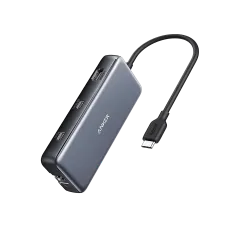
The NTONPOWER Pocket was specifically designed with cruise travelers in mind. Four AC outlets and three USB ports (including one 20W USB-C) in a flat-plug design that weighs just 8 ounces. Most importantly: no surge protection, so it is approved by Carnival, Norwegian, Princess, Holland America, MSC, and Celebrity cruise lines.
The flat 45-degree plug is a genuine travel advantage. It sits nearly flush against the wall, which means it works behind nightstands and in tight spaces where a standard plug would stick out and get bent. The 4-foot cord wraps around the body for tidy packing.
On our cruise test: We used this strip in a Carnival cabin for seven days. Four people, twelve devices, zero problems. The 20W USB-C port handled phone charging well, and the four AC outlets meant everyone could charge laptops and cameras simultaneously.
The catch: The 20W USB-C is phone-speed only. Do not expect to charge a laptop through USB-C with this strip. Also, Royal Caribbean bans all power strips as of 2025, including non-surge models — you will need a USB-only charging hub for Royal Caribbean sailings.
Pros
- No surge protection -- cruise approved on most lines
- Ultra-flat plug fits behind furniture and in tight spaces
- 4 widely-spaced AC outlets accommodate large adapters
- Only 8 oz -- lightest on our list
- 4ft wrapped cord for tidy packing
Cons
- 20W USB-C is phone-only, not for laptops
- Still banned on Royal Caribbean (they ban all strips)
- No surge protection for non-cruise use
- USB-A ports are slow (5V/2.4A shared)
3. Baseus PowerCombo 65W — Best USB-C Charging
If you need to charge a laptop through USB-C, the Baseus PowerCombo 65W is the strip to get. Two USB-C ports with 65W Power Delivery, two USB-A ports, and two AC outlets in a compact 6-in-1 design. It ships with a 100W USB-C cable included.
This is the strip digital nomads should carry. Plug it into a hotel wall outlet and it replaces your laptop charger, phone charger, and everything in between. The 65W USB-C port fully charges a MacBook Air in about two hours and keeps a MacBook Pro 14-inch charging at near-full speed. The second USB-C port handles your phone simultaneously.
We used this as our primary charger for three months across Portugal, Spain, and Thailand (with a plug adapter). One strip replaced three separate chargers and saved meaningful weight in our bag.
The catch: At around $36, it costs more than the Anker. And with only two AC outlets, you may run short if you have devices that still need traditional plugs.
Pros
- 65W USB-C PD charges laptops at full speed
- Includes 100W USB-C cable in the box
- Replaces your laptop charger entirely
- Dual-voltage USB (100-240V) works worldwide
- Compact for the power output
Cons
- Only 2 AC outlets -- may not be enough
- ~$36 is pricier than basic strips
- Has surge protection -- not cruise approved
- US plug requires adapter internationally
4. EPICKA TA-105 Pro — Best for International Travel
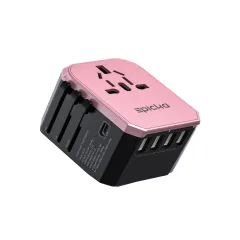
The EPICKA TA-105 Pro is not a power strip in the traditional sense — it is a universal travel adapter with GaN 70W charging built in. Three USB-C ports (one at 70W PD), two USB-A ports, and one universal AC outlet that works in 200+ countries. It replaces both your travel adapter and your multi-port charger.
The 70W USB-C port handles any laptop on the market. The other two USB-C ports output 5V/3A for phones and tablets. And the universal AC pass-through outlet lets you plug in one additional device with whatever plug type you need.
Why it stands out: If you are bouncing between countries with different plug types — say, a month in Europe followed by a month in Southeast Asia — you would normally need a travel adapter plus a power strip. The EPICKA combines both into one 8.3-ounce device with built-in fuse protection and safety shutters.
The catch: Only one AC outlet. If you need multiple AC plugs, you still need a separate strip. And at $36, it is an investment — though you are getting a universal adapter and a GaN charger in one.
Pros
- 70W USB-C PD charges any laptop
- Universal adapter works in 200+ countries
- GaN technology keeps it compact and cool
- 5 USB ports total -- phone, laptop, tablet, earbuds, watch
- Built-in 10A fuse and safety shutters
- Only 8.3 oz with universal plug system
Cons
- Only 1 AC outlet pass-through
- ~$36 -- more than basic strips
- Not a power strip replacement if you need multiple AC outlets
- 70W only from USB-C1; other USB-C ports are 5V/3A
5. One Beat 7-in-1 — Best Budget
At around $12, the One Beat 7-in-1 delivers the most ports per dollar of any strip on this list. Three AC outlets, two USB-A ports, and two USB-C ports with a 5-foot braided extension cord. No surge protection makes it cruise-approved. ETL listed for safety.
The 14AWG braided cord is noticeably more durable than the thin cords on cheaper strips, and the flat plug sits nearly flush against the wall. The USB ports share a total of 22.5W across all four ports — enough for phones and small devices, but not for fast charging anything.
Reality check: The USB-C ports on this strip are 5V/3A, not USB-C Power Delivery. They will charge a phone at moderate speed but will not fast-charge anything. If you just need outlets and basic USB charging on a budget, it is a solid pick. If you need real USB-C PD, spend the extra money on the Anker or Baseus.
Pros
- ~$12 -- cheapest on our list
- 7 total charging points (3 AC + 4 USB)
- No surge protection -- cruise approved
- 5ft braided cord is durable
- Flat plug design
- ETL safety certified
Cons
- USB-C is NOT Power Delivery -- slow charging only
- 22.5W shared across all USB ports
- No fast charging capability whatsoever
- Bulkier than the NTONPOWER at 10 oz
6. TROND Travel Power Strip with Detachable GaN III — Most Versatile
The TROND Detachable GaN has a clever trick: the USB charging block detaches from the power strip base. This gives you a 3-outlet extension cord with flat plug for when you just need more AC outlets, plus a standalone 35W GaN charger with 2 USB-C and 1 USB-A for when you just need USB charging. Two products in one.
The 35W PD output is enough to fast-charge any phone and can handle a MacBook Air at moderate speed. When combined, you get a 6-device charging station. When separated, you have a GaN charger for your daypack and a power strip for the hotel room.
Who it is for: Nomads who want options. Take the whole unit to your Airbnb. Detach the GaN block and throw it in your daypack for cafe work. It is the Swiss Army knife approach to travel charging.
Pros
- Detachable GaN charger doubles as a standalone charger
- 35W USB-C PD -- fast charges phones, moderate for ultrabooks
- 5ft flat cord for the extension strip
- Two products in one saves pack weight overall
- No surge protection on the base -- cruise-friendly
Cons
- ~$30 -- midrange pricing
- 35W is not enough for larger laptops
- 11 oz total weight when combined
- Only 1 USB-A port
Travel Power Strip vs Universal Travel Adapter
This is the most common question we get, so let us clarify:
A travel adapter changes the physical plug shape. It lets your US two-prong plug fit into a UK three-prong outlet, a European round-pin socket, or an Australian angled outlet. It does not convert voltage, add outlets, or provide USB ports (though many modern adapters now include USB).
A travel power strip multiplies your outlets. It takes one wall socket and turns it into 3-6 outlets plus USB ports. It does not change plug shapes — you still need a travel adapter if you are overseas.
The hybrid option is what we recommend for most international travelers: a universal travel adapter with built-in USB-C charging, like the EPICKA TA-105 Pro . It handles plug conversion and USB charging in one device.
For domestic US travel and cruises, a standard travel power strip (no adapter needed) like the Anker 521 is the better choice — more AC outlets, longer cord, and lower price.
For long-term international nomads, we carry both: a universal adapter with USB-C for daily charging, plus a compact power strip for Airbnbs and hotels where one outlet is never enough. See our full digital nomad packing list for the complete setup.
Cruise Ship Power Strip Rules
Cruise ships have strict electrical policies because of fire safety. Here is what you need to know for 2026:
Surge protectors are banned on virtually all cruise lines. Cruise ships use a two-hot-wire electrical system (unlike the hot-neutral system in US homes). Traditional surge protectors can fail to interrupt both wires, leading to overheating. The US Coast Guard has documented multiple shipboard fire incidents linked to passenger surge protectors. If your strip has a surge protector indicator light or a “protected” label, it will be confiscated at embarkation.
Cruise Line Policies (2026)
- Carnival — Non-surge power strips allowed. Surge protectors confiscated.
- Norwegian (NCL) — Non-surge power strips allowed. Surge protectors confiscated.
- Princess — Non-surge power strips allowed. Surge protectors confiscated.
- Holland America — Non-surge power strips allowed. Surge protectors confiscated.
- MSC — Non-surge power strips allowed. Surge protectors confiscated.
- Celebrity — Non-surge power strips allowed. Surge protectors confiscated.
- Royal Caribbean — All power strips and extension cords banned, including non-surge models. Only USB-only charging blocks are allowed.
Our recommendation: If you are not sailing Royal Caribbean, the NTONPOWER Pocket Power Strip or the One Beat 7-in-1 are both cruise-approved (no surge protection). For Royal Caribbean, bring a multi-port USB charging block instead.
Pro tip: Check your specific ship and sailing date. Policies can change. When in doubt, call the cruise line directly before you pack.
How to Choose a Travel Power Strip
USB-C wattage matters most. If you just charge phones and earbuds, 20-30W is fine. If you want to charge a laptop via USB-C, you need 65W or higher. Most budget strips have “USB-C” ports that are only 5V/3A (15W) — read the specs carefully.
Count your devices. List everything you charge daily: phone, laptop, earbuds, watch, power bank, camera. That is your minimum port count. For couples or families, double it. We recommend at least 3 USB ports and 2-3 AC outlets.
Weight and size. If you are a carry-on-only traveler, every ounce matters. The NTONPOWER at 8 oz and the EPICKA at 8.3 oz are the lightest options. The Anker at 10.4 oz is a reasonable middle ground.
Surge protection — know when to skip it. Surge protection is valuable for expensive electronics at home. But for travel, it makes your strip incompatible with cruise ships and adds weight. Most modern electronics (laptops, phones, chargers) have their own internal voltage regulation.
Cord length. A 5-foot cord reaches across most hotel rooms. Anything shorter than 3 feet will frustrate you. A wrapped or retractable cord keeps things tidy in your bag.
Dual-voltage USB. All USB ports on the strips we recommend accept 100-240V input, so they work worldwide. But remember: the AC outlets pass through raw voltage. Never plug a 120V-only appliance into a 220V outlet via any power strip.
The Bottom Line
For most travelers and digital nomads, the Anker 521 Power Strip is the best overall pick. It offers 30W USB-C fast charging, three AC outlets, a compact build, and Anker’s excellent reliability — all for around $16.
If you are heading on a cruise, grab the NTONPOWER Pocket Power Strip — no surge protection means no confiscation, and the flat plug design is perfect for tight cabin spaces.
And if you need serious USB-C power for laptop charging on the road, the Baseus PowerCombo 65W replaces your laptop charger entirely.
Whichever you choose, a travel power strip is one of those small investments that eliminates a daily annoyance. Pack it once, use it everywhere. Your future self — staring at a hotel room with one outlet behind the bed — will thank you.
Prices and availability are accurate as of February 2026. We update this article quarterly. See our full tech packing list for digital nomads for more gear recommendations, and check out our guide to staying connected on the road for the complete connectivity setup.
Frequently Asked Questions
Can you bring a power strip on a cruise ship?
Most cruise lines allow non-surge power strips but ban surge protectors. Carnival, Norwegian, Princess, Holland America, and MSC all permit non-surge strips. Royal Caribbean is the notable exception -- as of 2025, they prohibit all power strips and extension cords, even those without surge protection. Always check your specific cruise line's policy before packing. When in doubt, a USB-only charging hub is universally accepted.
Do I need a travel adapter or a travel power strip?
They solve different problems. A travel adapter changes the plug shape so your devices fit foreign outlets. A travel power strip multiplies the number of outlets and adds USB charging. The best option for international travel is a universal travel adapter with built-in USB-C ports, like the EPICKA TA-105 Pro, which handles both plug conversion and multi-device charging in one compact unit.
What wattage USB-C do I need to charge a laptop?
Most laptops need 45-65W USB-C Power Delivery to charge at full speed. A MacBook Air charges at 30W, a MacBook Pro 14-inch at 70W, and a Dell XPS 13 at 45W. Look for a power strip with at least 65W USB-C PD output if you plan to charge a laptop through USB-C. Lower wattage ports (20-30W) will charge phones and tablets fast but will only trickle-charge or not charge a laptop at all.
Are travel power strips TSA approved?
Yes. Power strips are allowed in both carry-on and checked luggage with no restrictions. They contain no batteries or hazardous materials, so TSA treats them like any other electronic accessory. We always pack ours in a carry-on for easy access during layovers.
How many USB ports do I need on a travel power strip?
Most digital nomads need 4-5 USB ports minimum. A typical daily charge cycle includes a phone, laptop (if USB-C PD), wireless earbuds, smartwatch, and a power bank. If you travel with a partner, double that. We recommend at least 3 USB ports plus 2-3 AC outlets to cover all scenarios without having to rotate devices.
Do travel power strips work with 220V outlets?
The USB ports on modern travel power strips are dual-voltage (100-240V), so they work safely worldwide. However, the AC outlets on a standard US power strip simply pass through whatever voltage comes from the wall -- they do not convert voltage. If you plug a 120V-only appliance (like a US hair dryer) into a 220V outlet via the power strip, it will fry. Only use the AC outlets with dual-voltage devices like laptop chargers, phone chargers, and camera chargers, or use a dedicated universal adapter.