Best Travel Water Bottles 2026: Filtered, Insulated & Collapsible
We tested 9 travel water bottles across 15+ countries. The best filtered, insulated, and collapsible bottles for digital nomads and long-term travelers in 2026.
Two years of full-time travel. 15+ countries. An embarrassing number of single-use plastic water bottles before we finally dialed in the right travel water bottle setup. Now we carry a filtered bottle everywhere and have not bought bottled water in over a year.
The right travel water bottle solves three problems at once: hydration in climates where you sweat through liters per day, safety in countries where tap water is not potable, and sustainability by eliminating your single-use plastic consumption. The wrong bottle is too heavy, too bulky, leaks in your travel backpack, or fails to filter the things that matter.
We tested 9 travel water bottles across real travel conditions — filling from questionable taps in Mexico City, surviving 40-degree days in Thailand, and cramming them into every backpack side pocket imaginable. This guide covers the best options for every travel style.
Our Top Picks at a Glance
| Feature | LifeStraw Go (22 oz) | GRAYL GeoPress (24 oz) | HydroFlask Wide Mouth (24 oz) | Vapur Element (23 oz) | CamelBak Eddy+ (25 oz) |
|---|---|---|---|---|---|
| Price | ~$40 | ~$90 | ~$35 | ~$13 | ~$16 |
| Capacity | 22 oz (650 ml) | 24 oz (710 ml) | 24 oz (710 ml) | 23 oz (700 ml) | 25 oz (750 ml) |
| Weight | 8.3 oz (empty) | 16 oz (empty) | 14.4 oz (empty) | 1.4 oz (empty) | 6.1 oz (empty) |
| Filter Type | Hollow fiber membrane + carbon | Purifier (viruses + bacteria + chemicals) | None (add-on available) | None | None |
| Filter Life | 4,000 liters (membrane) / 100L (carbon) | 250 liters (replaceable cartridge) | N/A | N/A | N/A |
| Insulated | No | No | Yes (24h cold / 12h hot) | No | No |
| Collapsible | No | No | No | Yes (rolls flat) | No |
| BPA Free | Yes | Yes | Yes | Yes | Yes |
| Our Verdict | Best Filtered | Best Purifier | Best Insulated | Best Collapsible | Best Budget |
| Visit LifeStraw Go (22 oz) | Visit GRAYL GeoPress (24 oz) | Visit HydroFlask Wide Mouth (24 oz) | Visit Vapur Element (23 oz) | Visit CamelBak Eddy+ (25 oz) |
How We Tested
Real travel conditions, not a lab. Each bottle was used as our daily driver for at least two weeks across multiple environments:
- Filtration testing: Filled from taps in Mexico, Thailand, and Indonesia where we would not normally drink unfiltered water
- Temperature retention: Ice water in 35+ degree heat, measured at 6, 12, and 24 hours
- Leak testing: Packed sideways and upside down in backpacks through full travel days
- Packability: Fit tested in side pockets of our top-rated travel backpacks
- Durability: Dropped on concrete, tossed into backpacks, run through daily use for months
- Airport workflow: Emptied and refilled through security at 10+ airports
Best Travel Water Bottles for Digital Nomads
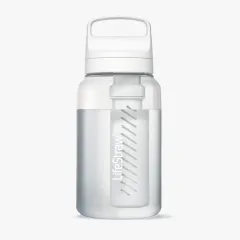
1. LifeStraw Go (22 oz) — Best Filtered Bottle
The LifeStraw Go is the bottle that replaced our bottled water habit entirely. The two-stage filtration system combines a hollow fiber membrane filter (removes 99.999% of bacteria and parasites) with an activated carbon capsule (reduces chlorine, organic chemicals, and bad taste). Fill it from any tap, squeeze it through the straw, and drink clean water.
In Mexico City, we filled the LifeStraw Go from hotel bathroom taps — water that locals explicitly told us not to drink. Zero stomach issues across three weeks. The water tasted clean and neutral, with no chemical or plastic aftertaste. This single bottle saved us approximately $45 in bottled water purchases during that trip alone.
The filter lifespan is exceptional. The hollow fiber membrane lasts 4,000 liters — roughly 2-3 years of daily use for a single traveler. At $40 for the bottle, the cost per liter is fractions of a cent. The carbon capsule needs replacing every 100 liters (roughly every 2-3 months), but replacements are only $10.
The drinking experience is different from a normal bottle. You drink through a built-in straw, and the filtration adds some resistance — you need to suck harder than with an unfiltered bottle. It is not difficult, but it is noticeable. You cannot chug from this bottle. Some travelers find this annoying. We barely noticed after the first day.
At 8.3 ounces empty, the LifeStraw Go is lighter than most filtered alternatives. The 22 oz capacity is adequate for most situations, though you will refill more often than with a larger bottle in hot climates. The Tritan plastic body is durable but not insulated — water reaches ambient temperature within an hour in tropical heat.
The catch: The LifeStraw Go does not remove viruses. In most travel scenarios this is fine — bacterial contamination is far more common than viral waterborne illness. But in areas with known viral contamination (some parts of rural India, post-disaster zones), the GRAYL GeoPress is the safer choice. The bottle is also not insulated, so forget about cold water in hot climates without adding ice.
Pros
- Two-stage filtration removes 99.999% of bacteria and parasites
- 4,000-liter filter life — lasts 2-3 years
- $40 price point — pays for itself in days
- Lightweight at 8.3 oz empty
- Leak-proof design survived every packability test
- BPA-free Tritan plastic is durable and clear
Cons
- Does not remove viruses — GRAYL is better for high-risk areas
- No insulation — water warms quickly in heat
- Straw drinking requires more suction than normal
- 22 oz capacity requires frequent refills in hot climates
- Carbon filter needs replacement every 2-3 months ($10)
2. GRAYL GeoPress (24 oz) — Best Purifier
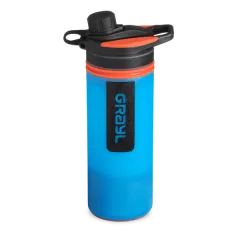
The GRAYL GeoPress is not just a filtered bottle — it is a purifier. The difference matters. Filters remove bacteria and parasites. The GRAYL’s purifier cartridge removes bacteria, viruses, protozoa, particulates, chemicals, and heavy metals. If you fill it from a river in Nepal or a questionable tap in rural India, the GRAYL makes it safe. Nothing else on this list offers that level of protection.
The press mechanism is brilliantly simple. Fill the outer container with water, insert the inner press, and push down like a French press coffee maker. Eight seconds of pressing and you have 24 ounces of purified water. No squeezing, no waiting, no gravity drip. Just press and drink. We purified water from rivers, ponds, hotel taps, and airport fountains — all came out clean and tasteless.
The purifier cartridge lasts 250 liters — roughly 2-3 months of daily use for a solo traveler. Replacement cartridges cost $25. At roughly $0.10 per liter of purified water, it is still dramatically cheaper than bottled water in most countries. But the replacement frequency is significantly higher than the LifeStraw, making ongoing costs roughly $100 per year.
At 16 ounces empty, the GeoPress is the heaviest bottle on our list. It is noticeably heavier than the LifeStraw Go, and when full (40 oz total weight), it takes up significant backpack space. The tradeoff is the most comprehensive water purification available in a portable bottle.
Who needs this level of protection? Travelers heading to rural areas in South and Southeast Asia, Sub-Saharan Africa, and Central America where viral waterborne illness is a documented risk. Adventure travelers who source water from natural sources (rivers, streams, lakes). Anyone who prioritizes maximum safety over weight and cost. If you stick to urban areas in developed or semi-developed countries, the LifeStraw Go’s bacterial filtration is sufficient.
Pros
- Removes viruses, bacteria, protozoa, chemicals, and heavy metals
- 8-second press mechanism — fastest purification on the list
- 24 oz capacity — good for full travel days
- Works with any water source including rivers and lakes
- No electricity or UV light required
- Rugged construction survives rough handling
Cons
- Heaviest bottle at 16 oz empty
- $90 price tag — most expensive option
- Cartridge replacement every 250 liters ($25 each)
- Bulky — does not fit all backpack side pockets
- Slight resistance when pressing requires two hands
- Not insulated — same heat issue as other non-insulated bottles
3. HydroFlask Wide Mouth (24 oz) — Best Insulated
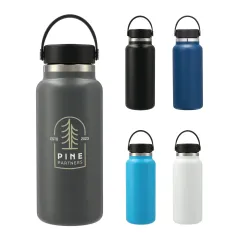
The HydroFlask Wide Mouth does not filter anything. But it does one thing better than every other bottle on this list: keep water ice cold in brutal heat. The double-wall vacuum insulation maintains cold water for 24 hours and hot beverages for 12 hours. In Bangkok at 38 degrees Celsius, ice water was still genuinely cold after a full day in our backpack. Nothing else comes close.
For nomads in tropical climates, cold water is not a luxury — it is a quality of life issue. When you are working from a cafe in Bali without air conditioning, or walking through Medellin at midday, pulling out a bottle of ice-cold water feels transformative. The HydroFlask turns a basic need into a small daily pleasure.
The wide mouth opening accommodates ice cubes, fruit, and easy cleaning. Narrow-mouth bottles are infuriating to clean without a bottle brush — the wide mouth solves this. It also lets you fill directly from water dispensers and fountains that have weak streams.
At 14.4 ounces empty, the HydroFlask is heavy for its capacity. That is the cost of insulation — the double-wall stainless steel construction adds weight. Full, the bottle weighs about 35 ounces. On long walking days, you feel it. This is where the collapsible Vapur Element shines as a lighter alternative when you do not need insulation.
The catch: No filtration means you need a reliable water source. In countries with potable tap water (most of Europe, Japan, South Korea, Australia, US, Canada), the HydroFlask is perfect. In countries where tap water is not safe, you need to pair it with a separate filter or buy filtered water to pour in. Some travelers carry both a LifeStraw Go for filtering and a HydroFlask for cold storage — that setup covers every scenario but doubles your bottle weight.
Pros
- 24-hour cold retention — best insulation in our lineup
- 12-hour hot retention for coffee and tea
- Wide mouth fits ice cubes and cleans easily
- Premium stainless steel construction lasts years
- Powder-coated exterior resists scratches and provides grip
- Lifetime warranty from HydroFlask
Cons
- No filtration — requires safe water source
- 14.4 oz empty — heaviest non-purifier option
- Stainless steel dents if dropped on hard surfaces
- $35 for a non-filtered bottle is premium pricing
- Condensation-free exterior can be slippery when wet
- Does not fit all backpack side pockets due to width
4. Vapur Element (23 oz) — Best Collapsible
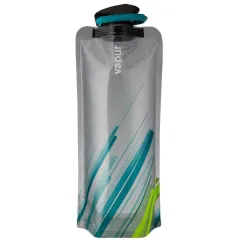
The Vapur Element weighs 1.4 ounces empty and rolls up to the size of a smartphone. For ultra-minimalist travelers, one-bag travelers, and anyone who values every cubic inch of pack space, the Vapur is the best option. It is also $13 — the cheapest bottle on our list.
When empty, the Vapur lies completely flat. Tuck it into a jacket pocket, the front pocket of your backpack, or even the back pocket of your jeans. When full, it holds 23 ounces and stands upright (barely — it wobbles). The carabiner clip lets you attach it to a backpack strap or belt loop when you do not have a side pocket available.
Durability was our biggest concern. The flexible BPA-free plastic feels fragile compared to rigid bottles. After four months of daily use, our Vapur survived without a single leak. It is not indestructible — sharp objects in a bag could puncture it — but for normal travel use, it is surprisingly tough. We carried it in the same tech organizer pocket as cables and adapters without issues.
The tradeoffs are real. No insulation means water reaches ambient temperature immediately. No filtration means you need safe water. The bottle cannot stand upright when partially full — it flops over. The drinking nozzle is narrow and flow is slower than a wide-mouth bottle. These are the sacrifices you make for extreme portability and light weight.
Best use case: A backup bottle you keep in your bag at all times and pull out when you need water but do not want to carry a heavy bottle. Many travelers carry a HydroFlask as their primary and a Vapur as a backup for long days when one bottle is not enough.
Pros
- 1.4 oz empty — lightest by a massive margin
- Rolls flat to phone size when empty
- $13 price — extremely affordable
- Carabiner clip for external carry
- BPA-free and dishwasher safe
- Freeze it flat as a reusable ice pack
Cons
- No insulation — water warms instantly
- No filtration — needs safe water source
- Cannot stand upright when partially full
- Narrow drinking nozzle limits flow rate
- Feels fragile compared to rigid bottles
- Not suitable as a sole bottle for long-term travel
5. CamelBak Eddy+ (25 oz) — Best Budget Rigid Bottle
The CamelBak Eddy+ is the bottle for travelers who want a simple, reliable, leak-proof water bottle without filtration or insulation features. At $16 and 6.1 ounces empty, it strikes the best balance of cost, weight, and durability for everyday travel use.
The bite valve and straw let you drink without unscrewing a cap — squeeze the bite valve and water flows. It is faster and easier than a screw-top, especially while walking or working. The valve is leak-proof when closed, which we verified by packing it upside down in a backpack with a laptop directly below it for two weeks. Zero leaks.
The 25 oz capacity is the largest on our budget list, holding enough water for a half-day of normal activity or a couple hours in tropical heat. The Tritan Renew plastic is shatter-proof, BPA-free, and made with 50% recycled content.
Best for: Nomads in countries with safe tap water who want a straightforward daily bottle. Pair it with a LifeStraw or GRAYL if you also travel to countries with unsafe water — the CamelBak handles the daily routine while the filtered bottle handles the risky stops.
Buy CamelBak Eddy+ on Amazon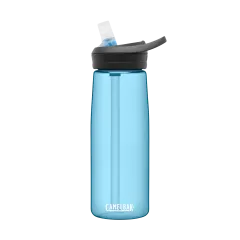
6. Brita Premium Filtering (26 oz) — Best for Taste
The Brita Premium Filtering Bottle is designed for travelers who have access to safe tap water but dislike the taste of chlorinated or mineral-heavy water. The built-in carbon filter reduces chlorine, particulates, and that metallic taste common in many cities worldwide. It does not purify unsafe water — this is a taste filter, not a safety filter.
The filter straw is integrated into the lid. Drink normally through the straw and water passes through the carbon filter as you sip. No pressing, no squeezing. The filter lasts about 40 gallons (roughly 2 months), and replacements are $7 each.
At 26 ounces with a squeeze-to-sip straw and leak-proof lid, the Brita is a solid everyday bottle. The price is reasonable at $25 and the filter makes tap water in cities like London, LA, and Bangkok taste noticeably better.
Buy Brita Premium Filtering Bottle on Amazon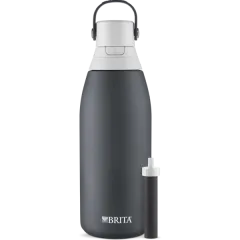
7. HydraPak Stash (25 oz) — Best Packable Design
The HydraPak Stash collapses to 40% of its full height — not as flat as the Vapur, but it stands upright when partially full, which the Vapur cannot do. This makes it the best middle ground between a collapsible bottle and a rigid bottle. It is flexible enough to compress when empty but rigid enough to function like a normal bottle when full.
The ABP (Above the Bite Point) valve delivers good flow rate and is leak-proof in our testing. The 25 oz capacity is generous for a collapsible bottle. At 3.6 ounces empty, it is heavier than the Vapur (1.4 oz) but dramatically lighter than any rigid insulated bottle.
For travelers who want packability without the floppy feel of a fully collapsible bottle, the HydraPak Stash is the sweet spot.
Buy HydraPak Stash on Amazon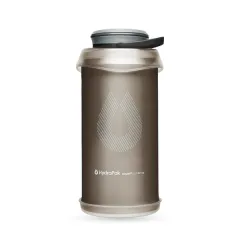
How to Choose the Right Travel Water Bottle
Decision Framework
Your ideal travel water bottle depends on three factors: where you travel, how you pack, and what you prioritize.
Traveling to countries with unsafe tap water? Get a filtered or purified bottle. The LifeStraw Go handles 90% of travel scenarios. The GRAYL GeoPress handles the remaining 10% where viral contamination is a concern.
Traveling to countries with safe tap water? Get an insulated bottle. The HydroFlask Wide Mouth keeps water cold all day — a genuine quality of life improvement in warm climates.
Ultra-minimalist or one-bag traveler? Get a collapsible bottle. The Vapur Element at 1.4 ounces and phone-sized when empty is impossible to beat for packability.
Budget under $20? The CamelBak Eddy+ is a reliable, leak-proof daily bottle that does the basics well.
The Two-Bottle Strategy
Many experienced nomads carry two bottles:
- A filtered bottle (LifeStraw Go) for safe drinking from any tap
- An insulated bottle (HydroFlask) or collapsible backup (Vapur) for cold water or extra capacity
This covers every scenario — safe water in developing countries and cold water in hot climates. The total weight is about 23 ounces (both empty), which is less than a single full 24 oz bottle.
Filter vs Purifier: Do You Need Virus Protection?
Filters (LifeStraw Go, Brita) remove bacteria and parasites through physical filtration. They are lighter, cheaper, and have longer filter lives. Adequate for 90% of travel.
Purifiers (GRAYL GeoPress) remove bacteria, parasites, viruses, chemicals, and heavy metals. Heavier, more expensive, shorter cartridge life. Necessary for water from natural sources or areas with known viral contamination.
The rule of thumb: If your water comes from municipal taps (even in developing countries), a filter is sufficient. If your water comes from rivers, streams, wells, or areas post-disaster, get a purifier.
Pair with Your Packing Setup
A good water bottle is one piece of the puzzle. Build the rest of your travel kit with our digital nomad packing list covering every essential, and find the right travel backpack to carry it all.
Buy LifeStraw Go — Best Overall Filtered BottleFrequently Asked Questions
Can you drink tap water with a filtered water bottle?
It depends on the filter. Basic carbon filters (like Brita) improve taste and remove chlorine but do not make unsafe tap water safe. Bottles with hollow fiber membrane filters like the LifeStraw Go remove 99.999% of bacteria and 99.999% of parasites — making questionable tap water drinkable. For maximum protection including viruses, the GRAYL GeoPress uses a purifier cartridge that removes bacteria, viruses, protozoa, and heavy metals. In developing countries where waterborne viruses are a concern, the GRAYL is the safest option.
Is a filtered water bottle worth it for travel?
Absolutely. A filtered water bottle pays for itself within days in countries where bottled water costs $1-3 per bottle. Beyond savings, you eliminate hundreds of single-use plastic bottles per year. In Southeast Asia, Central America, and parts of Africa where tap water is not potable, a filtered bottle is the difference between buying bottled water three times a day and filling up from any tap, restaurant, or hostel kitchen for free.
How long do water bottle filters last?
Filter lifespan varies by technology. The LifeStraw hollow fiber membrane filter lasts for approximately 4,000 liters — roughly 2-3 years of daily use. The GRAYL purifier cartridge lasts 250 liters (about 2-3 months of heavy use) and costs $25 to replace. Carbon filters in bottles like HydroFlask typically last 2-3 months or 40 gallons. Replacement cost and frequency matter — budget $30-60 per year for filter replacements.
What size water bottle should I travel with?
22-24 ounces (650-710 ml) is the sweet spot for travel. Under 20 ounces and you are refilling constantly, especially in hot climates. Over 32 ounces and the bottle is heavy, bulky, and does not fit in most backpack side pockets. For long travel days (flights, bus rides, hikes), a 24 oz bottle with insulation keeps you hydrated without the bulk of a liter bottle.
Can I take a water bottle through airport security?
Yes, but it must be empty when you go through security. Fill it at a water fountain on the other side. All bottles on our list are designed for this workflow — empty them before the checkpoint, refill at the gate. Filtered bottles are especially useful in airports where fountain water has an off taste. Collapsible bottles like the Vapur Element flatten completely and take up zero space in your bag when empty.
Are collapsible water bottles any good?
Modern collapsible bottles are surprisingly functional. The Vapur Element and HydraPak Stash roll up to the size of a phone when empty, saving significant pack space. The tradeoff is that they feel flimsier than rigid bottles, cannot stand upright when partially full, and lack insulation. For minimalist travelers who prioritize pack space above all else, a collapsible bottle is excellent. For everyday use, a rigid insulated bottle is more practical.