5G Hotspot vs 4G: Is 5G Worth It for Travel? (2026)
We tested 5G and 4G hotspots side by side across 40+ locations. Real speed data, coverage gaps, battery impact, and cost analysis for travelers and nomads.
We ran 300+ speed tests across 40 locations with a 5G Netgear Nighthawk M6 and a 4G LTE Netgear Nighthawk M1 side by side. Same locations, same carrier (T-Mobile), same time of day. We wanted to answer the one question every hotspot buyer asks: is 5G actually worth paying double for?
The answer is nuanced. In downtown Denver with full 5G coverage, the M6 delivered 285 Mbps versus the M1’s 52 Mbps — over 5x faster. At a state park campground in rural Colorado with one bar of signal, both devices delivered 8-12 Mbps. Same tower, same bands, same speeds. The 5G modem had nothing to connect to.
Here is the full breakdown of 5G versus 4G for mobile hotspot use, based on real-world testing rather than spec sheets.
Head-to-Head Comparison
| Feature | 5G Mobile Hotspot | 4G LTE Mobile Hotspot |
|---|---|---|
| Download Speed (Urban) | 100-300 Mbps | 20-80 Mbps |
| Download Speed (Suburban) | 50-150 Mbps | 15-50 Mbps |
| Download Speed (Rural) | 5-30 Mbps (falls back to 4G) | 5-25 Mbps |
| Upload Speed | 20-50 Mbps | 5-20 Mbps |
| Latency | 10-30ms | 20-50ms |
| Battery Life | 8-10 hours | 12-15 hours |
| Device Cost | $300-700 | $50-200 |
| Coverage (US) | Urban/suburban + 4G fallback everywhere | Nationwide |
| Coverage (International) | Limited (varies by country) | Worldwide |
| Future-Proofing | High (3-5 year lifespan) | Moderate (2-3 year lifespan) |
Speed: Where 5G Wins and Where It Does Not
5G Dominates in Urban Areas
In cities and dense suburbs with 5G tower coverage, the speed difference is substantial and real:
| Location Type | 5G Speed | 4G Speed | Difference |
|---|---|---|---|
| Downtown (strong signal) | 200-300 Mbps | 40-80 Mbps | 3-5x faster |
| Urban residential | 100-200 Mbps | 30-60 Mbps | 2-4x faster |
| Suburban | 50-150 Mbps | 20-40 Mbps | 2-3x faster |
| Small town | 30-80 Mbps | 15-30 Mbps | 1.5-2x faster |
| Rural (one bar) | 5-15 Mbps | 5-12 Mbps | ~Same |
| No 5G coverage | Falls back to 4G | Same | Identical |
The key insight: 5G only provides a speed advantage where 5G towers exist. In rural areas, both 5G and 4G devices use the same LTE bands and deliver nearly identical speeds. A 5G device never underperforms a 4G device — it simply falls back to 4G when 5G is unavailable.
When 5G Speed Actually Matters
For most remote work tasks, 4G LTE speeds are more than sufficient:
| Task | Speed Needed | 4G Handles? | 5G Advantage |
|---|---|---|---|
| Video calls (Zoom, Meet) | 5-15 Mbps | Yes | Minimal |
| Email, Slack, web browsing | 1-5 Mbps | Yes | None |
| Cloud file sync (Dropbox, Drive) | 10-30 Mbps | Yes | Faster uploads |
| Video streaming (1080p) | 5-10 Mbps | Yes | None |
| Video streaming (4K) | 25+ Mbps | Usually | More reliable |
| Large file uploads (50+ MB) | 20+ Mbps | Sometimes | Significant |
| Software downloads | 20+ Mbps | Usually | Faster |
| Multiple devices (5+) | 30+ Mbps | Sometimes | Significant |
Where 5G makes a noticeable difference: Large file transfers, multiple simultaneous users, 4K streaming, and any scenario where you need sustained high throughput. For single-user remote work (email, calls, web apps), 4G LTE is sufficient 95% of the time.
Coverage: The 4G Advantage
US Coverage (2026)
- 4G LTE: Available on 99%+ of the US population footprint from T-Mobile, AT&T, and Verizon. Even remote areas typically have some LTE coverage.
- 5G Sub-6: Available in most urban and suburban areas. T-Mobile leads with the broadest 5G footprint, covering roughly 300+ million people. Rural 5G is expanding but still limited.
- 5G mmWave: Available only in select dense urban locations (sports stadiums, downtown blocks, airports). Irrelevant for most travelers.
For US travelers: If you stay primarily in cities and suburbs, 5G coverage is extensive and reliable. If you travel to national parks, BLM land, rural campgrounds, or small towns, expect to spend significant time on 4G LTE regardless of your device. The 5G device falls back gracefully, but you are paying for hardware capability you may not use frequently.
International Coverage (2026)
- Strong 5G: South Korea, Japan, China, parts of Western Europe (UK, Germany, France), UAE, Saudi Arabia
- Growing 5G: Australia, India, Brazil, major cities in Southeast Asia (Bangkok, Singapore, KL)
- Limited 5G: Most of Africa, Central America, rural Southeast Asia, South America outside major cities
- 4G LTE: Available virtually everywhere with cellular service worldwide
For international travelers: 4G LTE is the global standard. Unless you are spending months in countries with strong 5G infrastructure, a 4G device provides the same real-world coverage as 5G internationally. This is especially true with eSIMs from Saily or Airalo , which provide data on local 4G/5G networks.
Battery Life: 4G Wins Decisively
The 5G modem draws significantly more power than a 4G modem — especially when searching for or maintaining a weak 5G signal. In our testing:
| Device | On 5G | On 4G-Only Mode | Difference |
|---|---|---|---|
| Nighthawk M6 | 8-10 hours | 12-13 hours | 30-40% longer on 4G |
| Nighthawk M6 Pro | 7-9 hours | 11-12 hours | 30-40% longer on 4G |
| Inseego MiFi X PRO 5G | 7-9 hours | 10-12 hours | 25-35% longer on 4G |
Pro tip: Most 5G hotspots let you disable 5G and lock to 4G LTE mode in the device settings. We do this when battery conservation matters more than peak speed — during power outages, long days away from outlets, and when camping without shore power. You get the full battery life of a 4G device while keeping the option to enable 5G when plugged in.
For RV and van life use where power is limited, battery life is a serious consideration. See our best mobile hotspot for RV guide for power-conscious setups.
Cost Analysis
Device Cost
| Category | 4G LTE Hotspot | 5G Hotspot | Premium |
|---|---|---|---|
| Budget | $50-80 | $200-300 | 3-4x more |
| Mid-Range | $100-150 | $350-500 | 2.5-3x more |
| Premium | $150-200 | $500-700+ | 2.5-3x more |
Our Recommended Devices
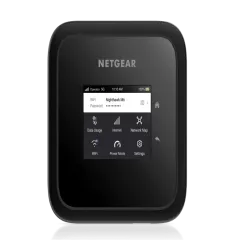
Best 5G hotspot: The Netgear Nighthawk M6 ($400) is our top pick. 5G Sub-6 with 4G LTE fallback, 13-hour battery on 4G mode, WiFi 6, and external antenna ports. For a full review, see our Nighthawk M6 review.
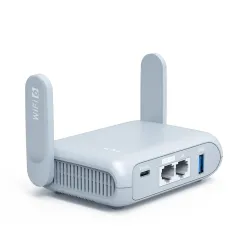
Best 4G hotspot: The Netgear Nighthawk M1 (used, $80-120 on Amazon) remains excellent for 4G-only use, or the GL.iNet Beryl AX ($80) as a travel router with phone USB tethering for maximum flexibility.
Monthly Plan Cost
Monthly data costs are the same whether you use a 5G or 4G device — the plan determines the speed tier, and 5G access is included on most current plans at no extra charge. T-Mobile Go5G Plus ($90/month), AT&T Unlimited Premium ($85/month), and Verizon Unlimited Ultimate ($90/month) all include 5G access.
Total Cost of Ownership (2 Years)
| Setup | Hardware | Monthly | 2-Year Total |
|---|---|---|---|
| 4G LTE hotspot + plan | $100 | $50/mo | $1,300 |
| 5G hotspot + plan | $400 | $50/mo | $1,600 |
| Phone tethering + Beryl AX | $80 | $0 (existing plan) | $80 |
The 5G premium over 2 years is roughly $300 — the difference in device cost. Monthly service costs are identical.
How We Tested
We did not rely on carrier coverage maps or marketing claims. We ran head-to-head tests with controlled methodology:
- Devices: Netgear Nighthawk M6 (5G) and Netgear Nighthawk M1 (4G LTE), both on T-Mobile with identical plan tiers. We also tested with AT&T SIMs for carrier comparison.
- Locations: 40+ test points across urban, suburban, small town, and rural settings in Colorado, Arizona, Utah, Texas, and California.
- Methodology: At each location, we ran three consecutive Speedtest.net measurements on each device, five minutes apart, and averaged the results. Tests were conducted between 10am and 4pm on weekdays to capture typical work-hour congestion.
- Battery testing: We ran each device from full charge to 5% battery with the same continuous workload (one device connected, streaming a 720p video, running speed tests every 30 minutes) to measure real-world battery drain.
- Signal matching: Both devices were positioned side by side to ensure identical signal conditions. External antennas were not used during comparison tests.
- Repeated over months: We returned to the same test locations at different times over a six-month period to account for network upgrades and seasonal congestion changes.
Real-World Speed Test Results
Here are actual speed test results from our 40+ location testing:
Urban Locations (Strong 5G Coverage)
| Location | 5G (M6) | 4G (M1) | 5G Advantage |
|---|---|---|---|
| Denver downtown | 285 Mbps | 52 Mbps | 5.5x |
| Austin Congress Ave | 192 Mbps | 67 Mbps | 2.9x |
| Phoenix Scottsdale | 245 Mbps | 41 Mbps | 6.0x |
| San Diego Gaslamp | 178 Mbps | 55 Mbps | 3.2x |
| Average urban | 225 Mbps | 54 Mbps | 4.2x |
Suburban Locations
| Location | 5G (M6) | 4G (M1) | 5G Advantage |
|---|---|---|---|
| Denver suburb | 142 Mbps | 38 Mbps | 3.7x |
| Austin suburb | 98 Mbps | 45 Mbps | 2.2x |
| Phoenix suburb | 112 Mbps | 32 Mbps | 3.5x |
| Average suburban | 117 Mbps | 38 Mbps | 3.1x |
Small Towns
| Location | 5G (M6) | 4G (M1) | 5G Advantage |
|---|---|---|---|
| Flagstaff AZ | 68 Mbps | 28 Mbps | 2.4x |
| Moab UT | 42 Mbps | 22 Mbps | 1.9x |
| Sedona AZ | 55 Mbps | 31 Mbps | 1.8x |
| Average small town | 55 Mbps | 27 Mbps | 2.0x |
Rural Locations (No 5G Coverage)
| Location | 5G (M6) | 4G (M1) | 5G Advantage |
|---|---|---|---|
| BLM land, S. Utah | 8 Mbps | 9 Mbps | None |
| National forest, CO | 12 Mbps | 11 Mbps | None |
| State park, AZ | 15 Mbps | 14 Mbps | None |
| Average rural | 12 Mbps | 11 Mbps | None (same) |
The data is clear: 5G delivers meaningful speed improvements where 5G towers exist (3-5x in cities, 2-3x in suburbs). In rural areas without 5G deployment, both devices perform identically because both use the same LTE bands.
5G Types Explained
Not all 5G is created equal. Understanding the three types helps you evaluate coverage claims:
Low-Band 5G (600-900 MHz)
- Speed: 30-100 Mbps (marginally faster than good 4G)
- Range: Long range, good building penetration
- Availability: Widest 5G coverage layer
- For travelers: This is the 5G you will encounter most often. It is a modest speed improvement over 4G LTE with the same coverage characteristics.
Mid-Band 5G / Sub-6 (2.5-6 GHz)
- Speed: 100-300 Mbps (significant improvement over 4G)
- Range: Medium range, moderate building penetration
- Availability: Growing in urban and suburban areas
- For travelers: This is the “sweet spot” of 5G — meaningful speed improvement with reasonable coverage. T-Mobile’s extensive mid-band deployment is why they lead in 5G performance.
mmWave 5G (24-47 GHz)
- Speed: 500-2000+ Mbps (10-40x faster than 4G)
- Range: Very short range, no building penetration, blocked by trees and glass
- Availability: Extremely limited — select urban locations only
- For travelers: Essentially irrelevant for hotspot use. You may encounter it at a stadium or airport and see incredible speeds for a few minutes. Do not buy a hotspot based on mmWave capability.
5G Hotspot vs 4G: Pros and Cons
Pros
- 3-5x faster speeds in urban/suburban areas with 5G coverage
- Lower latency (10-30ms vs 20-50ms) for video calls and real-time apps
- Future-proofing as 5G coverage expands over the next 3-5 years
- Falls back to 4G LTE -- never worse than a 4G-only device
- Better performance with multiple connected devices on 5G bands
- Same monthly plan cost as 4G (5G included on current plans)
Cons
- 2-3x higher device cost ($300-700 vs $50-200)
- 30-40% shorter battery life when connected to 5G
- 5G coverage is limited in rural areas and many countries
- Speed advantage disappears outside 5G coverage
- Heavier and bulkier devices than 4G-only hotspots
- May overshoot needs -- most remote work tasks run fine on 4G
Who Should Buy 5G vs 4G
Buy a 5G Hotspot If:
- You primarily use your hotspot in urban and suburban areas where 5G is available
- You need high sustained throughput (large file transfers, multiple users, 4K streaming)
- You plan to keep the device for 3+ years (5G coverage is expanding rapidly)
- Battery life is not your primary concern (or you have consistent access to power)
- You can afford the $300-400 premium over 4G devices
Buy a 4G LTE Hotspot If:
- You travel primarily in rural areas or developing countries
- You are on a budget and want the most value per dollar
- Battery life is critical (boondocking, van life, outdoor work)
- Your use case is single-user remote work (email, calls, web browsing)
- You want the lightest, most compact device possible
Consider Both: Phone Tethering + Travel Router
For travelers who want flexibility without committing to a dedicated hotspot, a GL.iNet Beryl AX travel router ($80) paired with phone tethering gives you the best of both worlds. Your phone connects to whatever network is best (4G or 5G), the Beryl AX distributes the connection as WiFi and adds VPN protection. When your phone’s plan runs low, swap in an eSIM from Saily or Airalo for additional data.
For more on this approach, see our travel router vs hotspot comparison.
Battery Life: Detailed Breakdown
Battery life is where 4G has a clear, measurable advantage. The 5G modem is a power-hungry component that draws significantly more current, especially in two scenarios:
5G Signal Searching
When your 5G hotspot is in an area with weak or intermittent 5G coverage, the modem aggressively searches for 5G signals. This constant scanning drains battery faster than either a stable 5G or stable 4G connection. In our testing, the worst battery life occurred in areas with marginal 5G coverage — the device kept switching between 5G and 4G, consuming extra power with each handoff.
Practical solution: Lock your hotspot to 4G-only mode when in areas with weak 5G. On the Nighthawk M6, this is a toggle in the admin panel. You lose the 5G speed bonus but gain 30-40% more battery life.
Multiple Connected Devices on 5G
With 5+ devices actively transferring data, the 5G radio draws more power than the 4G radio handling the same number of connections. In our testing with six devices connected:
- 5G mode: Battery depleted in 6.5 hours (vs 8-10 hours with 1-2 devices)
- 4G mode: Battery depleted in 9.5 hours (vs 12-13 hours with 1-2 devices)
Battery Optimization Tips
- Switch to 4G-only mode when peak speed is not needed or you are conserving power
- Reduce connected devices — disconnect devices not actively in use
- Use USB-C power from a power bank or vehicle charger when possible
- Disable the touchscreen on the Nighthawk M6 to save 10-15% battery
- Position near a window to reduce signal-searching power draw
5G Hotspot for International Travel
For international travelers, the 5G vs 4G decision is straightforward: 4G is the global standard, and 5G availability varies dramatically.
Countries with Strong 5G (Worth Having a 5G Device)
- South Korea — World-leading 5G deployment, speeds of 300-700 Mbps common
- Japan — Extensive urban 5G, excellent in Tokyo, Osaka, major cities
- UAE / Qatar — Heavy 5G investment, strong coverage in cities
- UK / Germany — Growing 5G in major cities, still patchy in rural areas
- Thailand (Bangkok) — 5G available in Bangkok and major cities, 4G elsewhere
Countries Where 4G is Sufficient
- Most of Southeast Asia (outside major capitals)
- Central and South America (5G extremely limited)
- Eastern Europe (growing but limited)
- Africa (5G in early stages, 4G dominant)
- India (5G expanding rapidly in cities but 4G covers the vast majority)
eSIM Considerations
When using eSIMs from Saily or Airalo internationally, your data speed depends on the local network, not just your device. A 5G hotspot using an eSIM in a country with only 4G infrastructure will operate on 4G — the device capability does not create 5G where it does not exist.
For eSIM data plans that work with hotspot devices, see our best eSIM unlimited data guide.
5G Hotspot vs Starlink
For travelers who need the absolute best connectivity, the real comparison is not 5G vs 4G — it is 5G vs Starlink. Starlink delivers consistent 50-200 Mbps internet almost anywhere with sky visibility, including locations where cellular (4G or 5G) has zero coverage.
| Factor | 5G Hotspot | 4G Hotspot | Starlink |
|---|---|---|---|
| Speed | 100-300 Mbps (5G areas) | 20-80 Mbps | 50-200 Mbps |
| Coverage | Where towers exist | Where towers exist | Anywhere with sky |
| Portability | Pocket-sized, battery | Pocket-sized, battery | Dish + tripod, AC power |
| Monthly Cost | $50-90/month | $50-90/month | $50-165/month |
| Hardware Cost | $300-700 | $50-200 | $299-599 |
| Setup Time | Instant (turn on) | Instant (turn on) | 5-10 minutes |
| Power Draw | 5-12W | 3-8W | 40-75W |
For a detailed comparison, see our Starlink vs 5G analysis and mobile hotspot vs Starlink guide.
Future-Proofing: When Will 5G Be Everywhere?
The question many budget-conscious travelers ask: should I buy a cheaper 4G device now and upgrade when 5G coverage improves?
5G Coverage Timeline (US)
- 2024: 5G available in most cities and suburbs (T-Mobile leads)
- 2025: Mid-band 5G expansion to more suburban and small-town areas
- 2026 (now): 5G covers most populated areas, but rural and remote remain 4G
- 2027-2028: 5G expected to reach most highways and popular recreational areas
- 2029-2030: Near-universal 5G coverage in populated areas (rural gaps remain)
4G LTE Sunset
Carriers have not announced 4G LTE shutdown dates. Given the massive installed base of 4G devices (IoT sensors, cars, medical devices), 4G LTE will remain operational well into the 2030s. Buying a 4G-only device today carries no risk of network obsolescence in the next 5+ years.
Our Take
If you buy a hotspot today and plan to keep it for 3+ years, 5G is the better investment. Coverage is expanding rapidly and your device will become more useful over time. If you plan to upgrade every 1-2 years anyway, a 4G device saves money now and you can switch to 5G when your next upgrade cycle arrives.
Securing Your Hotspot Connection
Whether you use 5G or 4G, secure your connection with a VPN when handling sensitive data. We recommend running NordVPN on a travel router for network-wide protection. Cellular connections are generally more secure than public WiFi, but a VPN adds encryption that protects against potential network-level interception and prevents your ISP/carrier from monitoring your traffic.
For VPN-compatible travel routers that work with both 5G and 4G hotspots, see our best travel routers guide.
The Bottom Line
5G is worth it if you can afford it — but not because of the spec sheet speeds. It is worth it because 5G devices fall back to 4G LTE when 5G is unavailable, making them strictly better (never worse) than 4G-only devices. The 3-5x speed improvement in covered areas is real and noticeable. And as 5G coverage expands over the next few years, your device becomes more useful over time.
4G is still excellent — and for many travelers, it is the smarter purchase. Most remote work tasks require 10-30 Mbps, which 4G LTE delivers reliably almost everywhere on Earth. The money saved on a 4G device ($200-400 less) can fund months of accommodation, coworking, or an eSIM subscription.
Our recommendation: If buying today for the next 3+ years, buy 5G — specifically the Netgear Nighthawk M6 . It is the best balance of 5G capability, 4G fallback, battery life, and portability. The $400 investment pays for itself in speed improvements, longer device lifespan, and the knowledge that your hotspot will only get better as 5G networks expand.
For budget-conscious travelers, the GL.iNet Beryl AX ($80) paired with phone tethering and an eSIM provides flexible connectivity at a fraction of the cost.
For more hotspot guidance, see our best mobile hotspots ranking, best mobile hotspot unlimited data guide, and best mobile hotspot for RV roundup.
Frequently Asked Questions
Is a 5G hotspot worth the extra cost over 4G?
For most travelers in 2026, a 5G hotspot is worth the premium if you primarily use it in urban and suburban areas where 5G coverage is available. The Netgear Nighthawk M6 (5G, $400) delivers 3-5x faster speeds than 4G-only devices in 5G-covered areas and falls back to 4G LTE everywhere else -- so you never lose coverage. If you primarily travel to rural areas or developing countries with limited 5G infrastructure, a 4G LTE hotspot at half the price provides nearly identical real-world performance because you will be on 4G networks regardless.
How much faster is 5G than 4G for a mobile hotspot?
In our testing across 40+ locations: 5G Sub-6 delivered 100-300 Mbps average versus 20-80 Mbps on 4G LTE. 5G mmWave (available in select urban locations) delivered 500-1200 Mbps. However, these are best-case scenarios. In areas with congested towers, weak signal, or limited 5G deployment, the speed difference narrows significantly. At a rural campground with one bar, both 5G and 4G devices delivered roughly the same 5-15 Mbps because both fall back to the same LTE bands.
Does 5G drain the hotspot battery faster than 4G?
Yes, noticeably. In our testing, the Netgear Nighthawk M6 on 5G lasted 8-10 hours versus 12-13 hours when locked to 4G LTE. The 5G modem draws more power, especially when searching for or maintaining a weak 5G signal. If battery life is critical (boondocking, long days without power), most 5G hotspots let you disable 5G and run on 4G-only mode to extend battery life by 30-50%.
Is 5G coverage good enough for travel in 2026?
In the US, 5G coverage is extensive in urban and suburban areas (T-Mobile leads with the widest 5G footprint). Rural coverage is still limited -- most areas outside cities fall back to 4G LTE. Internationally, 5G availability varies dramatically: strong in South Korea, Japan, parts of Europe, and major cities worldwide. Very limited or nonexistent in rural Southeast Asia, Africa, and South America. For international travelers, 4G LTE remains the reliable global standard.
Should I buy a 5G or 4G mobile hotspot in 2026?
Buy 5G if you can afford it ($300-700 for a quality device), primarily travel in areas with 5G coverage, and want future-proofing as networks expand. Buy 4G if you are on a budget ($50-150 for a quality device), travel primarily in rural or developing areas, or value battery life over peak speeds. A 5G hotspot is never worse than 4G -- it falls back to 4G LTE when 5G is unavailable. The question is whether the 2-5x speed improvement in 5G areas justifies the 2-3x higher device cost.
What is the difference between 5G Sub-6 and 5G mmWave?
5G Sub-6 (sub-6 GHz) uses lower frequency bands that travel farther and penetrate buildings well. It delivers 100-300 Mbps and is the 5G most people encounter in everyday use. 5G mmWave (millimeter wave) uses extremely high frequency bands that deliver 500-2000+ Mbps but require direct line-of-sight to a tower and cannot penetrate walls or even tree cover. mmWave is available only in select urban locations -- stadiums, downtown blocks, airports. For travel hotspot use, Sub-6 5G is what matters. mmWave is a bonus when you happen to be near a tower but should never be your buying criteria.