Best Mobile Hotspot for Europe 2026: Tested Across 12 Countries
We tested mobile hotspots and travel routers across 12 European countries. Top picks for travelers, nomads, and remote workers visiting Europe in 2026.
Europe’s 27-country EU roaming zone makes it one of the best continents for mobile connectivity — but hotel WiFi is still unreliable, cafe networks are insecure, and rural areas in Portugal, Greece, and Eastern Europe can have spotty coverage. Whether you are a digital nomad spending months in Lisbon, a backpacker hopping between hostels, or a van lifer crossing the Alps, a dedicated mobile hotspot or travel router gives you reliable, private internet that does not depend on your accommodation.
We tested 8 mobile hotspots and travel routers across 12 European countries over 6 months — from coworking spaces in Barcelona to campsites in the Algarve to ferries in Croatia. We ran over 250 speed tests, measured battery life under real workloads, tested VPN throughput, and evaluated cross-border roaming performance. The result is this definitive guide to the best portable WiFi devices for European travel in 2026.
The key insight: For most European travelers, you do not need an expensive standalone 5G hotspot. A $80 travel router paired with an eSIM on your phone delivers the best combination of cost, flexibility, and reliability. Here is why — and when to choose each option.
🏆 Quick Picks
Amazon
Compact WiFi 6 travel router with VPN support. Pair with phone tethering.
From $80
Amazon
13-hour battery, WiFi 6, SIM slot. No phone needed.
From $400
Amazon
Affordable 4G hotspot with long battery life. Great for occasional use.
From $60-80
Quick Comparison: Best Mobile Hotspots for Europe
| Feature | GL.iNet Beryl AX (MT3000) | Netgear Nighthawk M6 (MR6150) | Netgear Nighthawk M6 Pro (MR6500) | TP-Link M7450 | Huawei E5576-320 |
|---|---|---|---|---|---|
| Price | ~$80 | ~$400 | ~$700 | ~$80-120 | ~$50-70 |
| Type | Travel Router | 5G Mobile Hotspot | 5G mmWave Hotspot | 4G LTE Hotspot | 4G LTE Hotspot |
| Cellular Modem | No (USB tethering) | 5G Sub-6 / 4G LTE | 5G mmWave + Sub-6 / 4G LTE | 4G LTE Cat 6 (300 Mbps) | 4G LTE Cat 4 (150 Mbps) |
| WiFi Standard | WiFi 6 (AX3000) | WiFi 6 | WiFi 6E | WiFi 5 (AC) | WiFi 4 (N) |
| Battery | USB-C powered (no battery) | 5040mAh (~13 hours) | 5040mAh (~10 hours) | 3000mAh (~10 hours) | 1500mAh (~6 hours) |
| SIM/eSIM Slot | No | Nano SIM | Nano SIM | Micro SIM | Micro SIM |
| VPN Support | WireGuard, OpenVPN built-in | No built-in VPN | No built-in VPN | No | No |
| Weight | 11 oz (312g) | 8.5 oz (241g) | 9.3 oz (264g) | 4.9 oz (139g) | 3.5 oz (100g) |
| Best For | Most European travelers | Remote workers needing standalone cellular | Maximum speed; cities with mmWave 5G | Budget-friendly standalone hotspot | Ultra-budget; backup hotspot |
| Visit GL.iNet Beryl AX (MT3000) | Visit Netgear Nighthawk M6 (MR6150) | Visit Netgear Nighthawk M6 Pro (MR6500) | Visit TP-Link M7450 | Visit Huawei E5576-320 |
1. GL.iNet Beryl AX (GL-MT3000) — Best Overall for Europe
Price: ~$80 | Type: Travel Router | Battery: USB-C powered | WiFi: WiFi 6 AX3000
The GL.iNet Beryl AX is our top recommendation for European travel because it solves the problems most travelers actually face — insecure public WiFi, unreliable hotel connections, and the need to share one internet source across multiple devices — without the cost and complexity of a standalone cellular hotspot.
How It Works
The Beryl AX is not a hotspot in the traditional sense. It does not have a cellular modem or SIM slot. Instead, it creates a private WiFi network from an existing internet source: hotel/Airbnb WiFi, your phone’s USB tethering, a wired ethernet connection, or another hotspot. It acts as a middleman that adds security, VPN support, and multi-device sharing to any internet source.
Why It Excels in Europe
Public WiFi security: European hotels, cafes, airports, and trains all offer WiFi, but these networks are unsecured. The Beryl AX runs NordVPN or WireGuard directly on the router, encrypting all traffic from every connected device without configuring VPN on each device individually.
Hotel WiFi repeating: Many European hotels have WiFi that barely reaches your room or limits you to one device. The Beryl AX connects to the hotel WiFi and rebroadcasts it as your own private network, extending range and allowing unlimited devices.
Phone tethering optimization: Connect your phone via USB-C to the Beryl AX, and it shares your phone’s cellular data to all your devices over WiFi 6. Your phone charges simultaneously. This is the most practical way to use an eSIM across laptop, tablet, and other devices without draining your phone battery.
Performance in Europe
We tested the Beryl AX across France, Spain, Portugal, Italy, Germany, and Croatia:
| Test | Result |
|---|---|
| WiFi repeating (hotel) | 85-95% of source speed retained |
| USB tethering throughput | Full phone cellular speed (tested up to 180 Mbps) |
| VPN overhead (WireGuard) | 5-10% speed reduction |
| Devices connected | Tested with 8 simultaneously |
| Setup time | Under 2 minutes |
Pairing with an eSIM for Europe
The ideal European setup: install a Europe-wide eSIM from Saily or Airalo on your phone, then tether to the Beryl AX via USB-C. Your phone provides cellular data, the Beryl AX distributes it over WiFi 6 to all your devices with VPN protection, and your phone charges while connected. One data source, every device connected, fully encrypted.
For a complete review, see our GL.iNet Beryl AX review. For setup instructions, see our travel router setup guide.
Check GL.iNet Beryl AX price on Amazon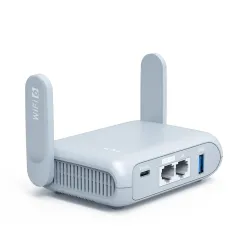
2. Netgear Nighthawk M6 (MR6150) — Best Standalone 5G Hotspot
Price: ~$400 | Type: 5G Hotspot | Battery: 13 hours | WiFi: WiFi 6
If you want a completely standalone cellular device that does not require your phone — the Nighthawk M6 is the best option for European travel. Insert a European SIM or eSIM, turn it on, and you have WiFi 6 internet for up to 32 devices with 13 hours of battery life.
Why Choose a Standalone Hotspot
- Phone independence: Your phone battery and data are not consumed
- Better cellular reception: Dedicated antenna performs better than phone antennas
- Longer battery: 13 hours outlasts any phone tethering session
- Dedicated device: No incoming calls or notifications disrupting your data connection
- SIM flexibility: Use a dedicated European data SIM separate from your phone plan
Performance in Europe
We tested the Nighthawk M6 (unlocked, international version) with various European SIMs:
| Network / Country | Download | Upload | Latency |
|---|---|---|---|
| Vodafone 5G (Spain) | 180-320 Mbps | 25-45 Mbps | 18-30ms |
| Orange 4G (France) | 55-95 Mbps | 15-30 Mbps | 22-38ms |
| Three 5G (UK) | 120-280 Mbps | 20-40 Mbps | 15-28ms |
| Telekom 5G (Germany) | 150-350 Mbps | 30-50 Mbps | 16-28ms |
| NOS 4G (Portugal) | 40-80 Mbps | 10-20 Mbps | 25-40ms |
| TIM 4G (Italy) | 45-90 Mbps | 12-25 Mbps | 22-35ms |
5G vs 4G in Europe: 5G coverage varies significantly across European countries. Germany, UK, and Spain have extensive 5G networks in cities. Portugal, Greece, and Eastern Europe are still predominantly 4G. The M6 falls back to 4G gracefully, so you are never without a connection — you just get 4G speeds in areas without 5G towers.
Battery Life
The Nighthawk M6’s 5040mAh battery delivered the following real-world runtimes in our testing:
| Usage | Battery Life |
|---|---|
| Light (email, browsing) | 12-14 hours |
| Moderate (mixed work) | 10-12 hours |
| Heavy (video calls, streaming) | 7-9 hours |
| Continuous download | 6-7 hours |
For extended sessions, pair it with a USB-C power bank. A 20,000mAh power bank adds approximately 25-30 hours of additional runtime.
For our complete review, see the Netgear Nighthawk M6 review.
Check Nighthawk M6 price on Amazon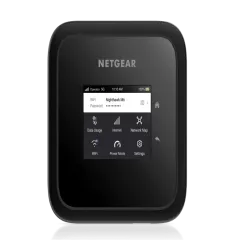
3. Netgear Nighthawk M6 Pro (MR6500) — Fastest Hotspot for European Cities
Price: ~$700 | Type: 5G mmWave Hotspot | Battery: 10 hours | WiFi: WiFi 6E
The M6 Pro adds mmWave 5G support and WiFi 6E to the Nighthawk lineup. In European cities with mmWave deployments (select areas of London, Berlin, Madrid), it can hit speeds exceeding 1 Gbps. For most European travel, the standard M6 is more practical — but if you need the absolute fastest mobile internet and will spend time in 5G-equipped cities, the Pro delivers.
Who Needs the M6 Pro in Europe
The M6 Pro makes sense for a narrow audience: remote workers who handle large file transfers (video editors, photographers, developers pushing builds), travel in major European cities with mmWave 5G, and do not mind the $700 price tag and shorter 10-hour battery life.
For most European travelers, the standard M6 or the Beryl AX is a better value. mmWave 5G coverage is limited to specific blocks in a few major cities, and Sub-6 5G (which the standard M6 supports) covers vastly more area.
Check Nighthawk M6 Pro price on Amazon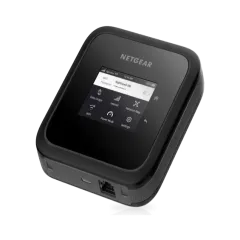
4. TP-Link M7450 — Best Budget Standalone Hotspot
Price: ~$80-120 | Type: 4G LTE Hotspot | Battery: 10 hours | WiFi: WiFi 5
The TP-Link M7450 is a solid, no-frills 4G hotspot that costs a fraction of the Nighthawk series. It supports LTE Cat 6 (up to 300 Mbps theoretical), has a 10-hour battery, and connects up to 32 devices. It lacks 5G, WiFi 6, and some of the Nighthawk’s premium features — but for European travel, 4G LTE is more than fast enough.
Why 4G Is Fine for Europe
European 4G LTE networks are mature and deliver 30-100 Mbps in most areas. Unless you are in a major city center with 5G coverage, a 4G hotspot will deliver speeds indistinguishable from a 5G device for real-world use. Video calls require only 3-5 Mbps. Cloud-based work tools are comfortable at 10-20 Mbps. Even streaming 4K video needs only 25 Mbps. A 4G hotspot handles all of these easily.
Performance in Europe
| Country | Download | Upload | Notes |
|---|---|---|---|
| Spain (Orange 4G) | 40-80 Mbps | 12-25 Mbps | Consistent |
| Portugal (NOS 4G) | 35-70 Mbps | 8-18 Mbps | Good in cities |
| Italy (Vodafone 4G) | 38-75 Mbps | 10-20 Mbps | Solid |
| Germany (o2 4G) | 30-60 Mbps | 8-15 Mbps | Variable in rural |
| Croatia (A1 4G) | 25-55 Mbps | 6-12 Mbps | Good in coastal areas |
The M7450 uses a micro SIM slot (not nano), so you may need a SIM adapter. Alternatively, use an eSIM on your phone and tether to the Beryl AX.
Check TP-Link M7450 price on Amazon5. Huawei E5576-320 — Ultra-Budget Backup Hotspot
Price: ~$50-70 | Type: 4G LTE Hotspot | Battery: 6 hours | WiFi: WiFi 4 (N)
The Huawei E5576 is the cheapest viable hotspot for European travel. At $50-70, it is an impulse buy — and a reasonable backup device or starter hotspot for budget travelers. It supports 4G LTE Cat 4 (up to 150 Mbps theoretical), connects up to 16 devices, and has a compact pocket-sized design.
Limitations
The E5576’s weaknesses are real: 6-hour battery life is short for a full workday, WiFi 4 limits throughput to older wireless standards, and LTE Cat 4 caps real-world speeds around 50-80 Mbps. It also lacks any VPN support.
Who Should Buy It
- Budget travelers who need basic connectivity for email, messaging, and light browsing
- Backup device users who carry it alongside a phone eSIM or travel router as a failover
- Short trips where 6 hours of battery life is sufficient
- First-time hotspot buyers who want to test the concept before investing in a Nighthawk
Best Data Plans for European Hotspots
Choosing the right data source is as important as choosing the right hardware. Europe’s EU roaming regulations make this easier than most continents.
EU Roaming Rules (Roam Like at Home)
Since 2017, EU/EEA regulations allow you to use your mobile data plan across all 27 EU member states plus Iceland, Liechtenstein, and Norway at no extra charge. A SIM purchased in France works in Germany, Spain, Italy, Portugal, and every other EU country with the same data allowance and speed.
Important exceptions:
- United Kingdom: No longer covered by EU roaming after Brexit. UK SIMs may charge for EU roaming and vice versa.
- Switzerland: Not in the EU/EEA — roaming charges may apply.
- Fair use policies: Some carriers limit roaming data to prevent “permanent roaming.” If you use more data abroad than at home for 4+ months, the carrier may apply a surcharge.
eSIM Options for European Hotspots
For hotspots with eSIM support, or for tethering from your phone to a travel router:
Saily — Europe-wide data plans at competitive prices. Easy activation, good network quality. Our top eSIM recommendation for European travel.
Airalo — Offers country-specific and regional Europe eSIM plans. Larger plan selection. Good for longer stays where you want more data.
Physical SIM Options
For hotspots with physical SIM slots:
- Orange Holiday Europe: 20GB data + calls across EU for ~$30-40. Available at airports and convenience stores across France and other markets.
- Vodafone Travel SIM: Multi-country European coverage. Available online and in Vodafone stores.
- Local SIMs: Buy a local prepaid SIM at your first European destination. Thanks to EU roaming, it works across all EU countries.
For a deep dive on the best eSIMs and SIMs for European travel routers, see our best SIM cards for travel routers guide.
Which Setup Should You Choose?
Setup 1: Travel Router + Phone eSIM (Best Value)
Total cost: ~$80 (router) + $10-25/month (eSIM) = $90-105 to start
- Buy a GL.iNet Beryl AX (~$80)
- Install a European eSIM from Saily on your phone
- Tether phone to router via USB-C
- All devices connect to router’s WiFi with VPN protection
Best for: Most European travelers, digital nomads, budget-conscious remote workers.
Setup 2: Standalone Hotspot + Dedicated SIM (Most Independent)
Total cost: ~$400 (hotspot) + $20-50/month (SIM) = $420-450 to start
- Buy a Netgear Nighthawk M6 (~$400)
- Insert a European data SIM or eSIM
- All devices connect directly to hotspot WiFi
Best for: Remote workers who need dedicated cellular independent of their phone, heavy data users, van lifers.
Setup 3: Budget Hotspot + Local SIM (Cheapest)
Total cost: ~$60 (hotspot) + $10-30 (prepaid SIM) = $70-90 to start
- Buy a TP-Link M7450 or Huawei E5576
- Buy a local prepaid SIM at your arrival airport/city
- Basic connectivity for all devices
Best for: Budget travelers, short trips, backup connectivity.
Setup 4: Travel Router + Hotel WiFi Only (Zero Data Cost)
Total cost: ~$80 (router) + $0/month = $80 total
- Buy a GL.iNet Beryl AX
- Connect to hotel/Airbnb/cafe WiFi
- Router adds VPN security and multi-device sharing
Best for: Travelers who primarily stay at accommodations with WiFi and want security and convenience.
VPN Considerations for European Travel
A VPN is important for European travel regardless of which hotspot setup you choose:
Public WiFi security: European hotels, cafes, airports, and trains offer open WiFi networks that are trivially easy to intercept. A VPN encrypts all traffic.
Accessing home services: Some banking apps, streaming services, and work tools restrict access to your home country’s IP addresses. A VPN lets you appear to connect from home.
Privacy: While Europe has strong GDPR protections, a VPN adds an additional layer of privacy, especially on shared networks.
NordVPN is our top recommendation — it has excellent European server coverage, fast WireGuard-based NordLynx protocol, and built-in support on the GL.iNet Beryl AX travel router. For a comparison of VPN options, see our best VPN for travel guide.
European Country Cellular Coverage Guide
Not all European countries have equal cellular coverage. Here is what to expect:
| Country | 4G Coverage | 5G Coverage | Rural Coverage | Notes |
|---|---|---|---|---|
| Germany | Excellent | Good (cities) | Moderate | Rural gaps in former East Germany |
| France | Excellent | Good (cities) | Good | Strong rural LTE |
| Spain | Excellent | Good (cities) | Good | Excellent along coasts |
| Portugal | Good | Growing | Moderate | Rural interior can be spotty |
| Italy | Good | Good (north) | Moderate | South and islands less reliable |
| UK | Excellent | Good (cities) | Good | Rural Scotland and Wales patchy |
| Netherlands | Excellent | Good | Excellent | Dense coverage nationwide |
| Greece | Good | Limited | Moderate | Islands vary significantly |
| Croatia | Good | Limited | Good (coast) | Inland mountains patchy |
| Poland | Good | Growing | Good | Improving rapidly |
| Romania | Good | Growing | Moderate | Rural areas improving |
| Scandinavia | Excellent | Good | Good | Even rural Nordics well-covered |
For countries with spotty rural coverage (Portugal interior, rural Greece, mountain Croatia), having both a cellular hotspot and the ability to connect to local WiFi via a travel router gives you maximum flexibility.
Frequently Asked Questions
Can I buy a mobile hotspot when I arrive in Europe?
Yes. Electronics stores (MediaMarkt, FNAC, Saturn), phone shops, and even airport duty-free stores sell mobile hotspots throughout Europe. However, selection may be limited and prices are typically higher than buying online. We recommend purchasing before you travel.
How do EU roaming rules affect my hotspot?
EU roaming rules apply to the SIM card, not the device. If your SIM has an EU data plan, it works across all EU/EEA countries regardless of which hotspot or phone you put it in. The hotspot itself just needs to support the correct network bands.
Should I get a 4G or 5G hotspot for Europe?
For most European travelers, 4G is sufficient and much more cost-effective. European 4G networks deliver 30-100 Mbps, which handles all remote work tasks. 5G offers faster speeds in city centers but has limited rural coverage. If budget allows and you will spend time in major European cities, 5G is a nice-to-have — but not a necessity.
Can I use my hotspot on European trains?
Yes. Cellular hotspots work on European trains, though speed varies with signal strength. High-speed trains (TGV, ICE, AVE, Eurostar) often have onboard WiFi that you can connect to via a travel router. Signal drops in tunnels and rural stretches are normal. For critical work, schedule video calls for when you are stationary.
What European countries have the best mobile internet?
The Netherlands, Denmark, and Norway consistently rank among the world’s fastest mobile networks. Germany, France, Spain, and the UK also have excellent infrastructure. Greece, Romania, and rural areas of Southern and Eastern Europe tend to have slower average speeds.
The Bottom Line
For most European travelers, a GL.iNet Beryl AX travel router ($80) paired with a European eSIM is the smartest setup. It costs a fraction of a standalone hotspot, secures every WiFi network you connect to, and turns your phone’s cellular data into a shared WiFi 6 network for all your devices. Add NordVPN running on the router for complete security.
If you need phone-independent cellular internet — for van life, extended rural travel, or as a dedicated work connection — the Netgear Nighthawk M6 ($400) is the best standalone option with its 13-hour battery and 5G support.
For more hotspot options beyond Europe, see our best mobile hotspots overall guide. For a deep dive on travel routers specifically, see best travel routers. For choosing the right data plan, see best SIM cards for travel routers and best eSIM for Europe.
Frequently Asked Questions
Do I need a mobile hotspot for Europe?
It depends on your travel style. If you stay in hotels and coworking spaces with reliable WiFi, you probably do not need one. If you work remotely from Airbnbs with unreliable internet, travel by van, camp, or visit rural areas, a mobile hotspot with a European eSIM gives you reliable connectivity that does not depend on your accommodation's WiFi. Travel routers like the GL.iNet Beryl AX are also useful for securing public WiFi networks.
Can I use a US mobile hotspot in Europe?
Only if it is unlocked and supports European LTE/5G bands. Most US carrier-locked hotspots (T-Mobile, Verizon, AT&T) are restricted to US networks. Unlocked devices like the Netgear Nighthawk M6 and TP-Link M7450 support global bands and work in Europe with a local SIM or eSIM. Travel routers like the GL.iNet Beryl AX work everywhere since they use your phone's tethered data.
What is the best SIM card or eSIM for a European hotspot?
For eSIM-compatible hotspots, Saily and Airalo offer Europe-wide data plans that work across EU countries without roaming charges. For physical SIM hotspots, a multi-country SIM from a provider like Orange Holiday Europe or Vodafone gives you data in 30+ European countries. An EU SIM benefits from EU roaming rules that allow you to use your plan across all EU/EEA member states at no extra charge.
Will my mobile hotspot work in the UK after Brexit?
Yes, most hotspots work fine in the UK. However, EU roaming rules no longer apply to the UK after Brexit, so a European SIM may charge roaming fees in the UK depending on the provider. Some EU SIMs include UK roaming; others do not. Check your specific plan. A separate UK SIM or eSIM is the safest option if you are spending significant time in the UK.
How much data do I need for remote work in Europe?
For a typical remote work day (video calls, email, cloud apps, web browsing), budget 3-5 GB per day or 20-35 GB per week. Video calls are the biggest consumer at 1-2 GB per hour. A 10 GB monthly eSIM plan is enough for occasional backup use, while remote workers who rely on cellular as their primary connection should get 20-50 GB or an unlimited plan.
Is 4G LTE fast enough for remote work in Europe?
Yes. 4G LTE in most European countries delivers 30-100 Mbps download speeds, which is more than sufficient for video calls (requires 3-5 Mbps), cloud-based work, and file transfers. 5G offers faster speeds (100-500+ Mbps) but 4G coverage is far more widespread across Europe, especially in rural areas. A 4G hotspot is a better value choice for most European travel.