Best Blue Light Glasses for Remote Work 2026: Tested Over 1,000+ Screen Hours
We tested 7 blue light glasses over 1,000+ screen hours across cafes and coworking spaces. The best options for reducing eye strain during remote work.
If you are reading this, you probably spend 8-12 hours a day staring at screens. So do we. After two years of remote work across coworking spaces in Lisbon, cafes in Chiang Mai, and Airbnbs in Mexico City, we noticed a pattern: by 4 PM, our eyes felt like sandpaper, headaches crept in by evening, and falling asleep after a late work session was a battle.
Blue light glasses were one of the changes that helped. Not a silver bullet — proper screen breaks, monitor positioning, and hydration matter more — but a noticeable improvement in daily comfort during marathon screen sessions.
We tested 7 pairs of blue light glasses over 1,000+ hours of combined screen time across different lighting conditions: bright coworking spaces with harsh fluorescent lights, dim cafe corners, sunny rooftop setups, and late-night hotel room sessions. We measured visible tint, assessed comfort during 8+ hour wear, and tracked subjective eye strain levels across testers.
Here is what actually works.
Quick Comparison: Best Blue Light Glasses for Remote Work
| Feature | Felix Gray Turing | GUNNAR Intercept | TIJN TR90 | Zenni Blokz | Cyxus CR-39 |
|---|---|---|---|---|---|
| Blue Light Filtering | ~50% (proprietary) | 65% | ~30% | ~20-30% | ~35% |
| Lens Type | Optical-grade clear | Amber-tinted | Clear with slight tint | Clear | Clear resin |
| Tint | Virtually none | Noticeable amber | Minimal | None visible | Slight blue sheen |
| Weight | 23g | 29g | 18g | 22g | 20g |
| Frame Material | Acetate | Polycarbonate | TR90 flex plastic | Various | TR90 + metal |
| Prescription Available | Yes | Yes | No (frame only) | Yes (from $17) | No |
| Price | ~$95 | ~$55 | ~$16 | ~$17-40 | ~$22 |
| Our Pick | Best Overall | Best Protection | Best Budget | Best Prescription Value | Best Mid-Range |
| Visit Felix Gray Turing | Visit GUNNAR Intercept | Visit TIJN TR90 | Visit Zenni Blokz | Visit Cyxus CR-39 |
How We Tested
We did not run laboratory spectrophotometer tests — those exist, and GUNNAR and Felix Gray publish their own lab results. Instead, we focused on what matters for remote workers who wear these glasses all day:
- Comfort during 8+ hour wear. Nose pad pressure, temple squeeze, weight distribution, and whether we forgot we were wearing them (the ultimate test).
- Color distortion. Can you do design work, photo editing, or color-graded video calls without everything looking yellow? We had a designer on our team test each pair during actual client work.
- Lens clarity. Cheap blue light lenses introduce optical distortion that causes headaches — the opposite of what you want. We checked for waviness, edge blur, and clarity across the visual field.
- Subjective eye strain reduction. Each tester wore a pair exclusively for one week during normal 8-10 hour workdays and rated their end-of-day eye fatigue on a 1-10 scale.
- Durability and travel-friendliness. Did they survive being tossed in a backpack, sat on accidentally, or flexed repeatedly?
Every pair was tested by three people with different head sizes and face shapes over a minimum of five full workdays each.
Best Blue Light Glasses for Remote Workers
1. Felix Gray Turing — Best Overall
The Felix Gray Turing glasses justify their $95 price tag with one key advantage: you genuinely forget you are wearing them. After 8 hours of coding in a Lisbon coworking space, we had to consciously check whether they were still on our face. That level of comfort is rare.
Felix Gray uses a proprietary blue light filtering technology embedded within the lens material rather than applied as a surface coating. The result is a lens that filters approximately 50% of blue light while remaining almost perfectly clear — no amber tint, no color shift. Our designer tester confirmed that color-critical work in Figma and Lightroom looked accurate through these lenses.
The acetate frames feel premium and lightweight at 23 grams. The spring hinges accommodate a range of head sizes without squeezing. The lenses include a high-quality anti-reflective coating that eliminates the glare from overhead fluorescents in coworking spaces — which, in our experience, contributes more to eye strain than blue light itself.
Where Felix Gray falls short is price. At $95 for non-prescription, they cost 4-6x more than budget alternatives. You are paying for optical-grade clarity, premium materials, and the most natural color rendering of any blue light glasses we tested.
Pros
- Virtually no color distortion -- safe for design work
- Exceptionally comfortable for all-day wear at 23g
- Premium acetate frames with spring hinges
- Excellent anti-reflective coating reduces glare
- Prescription options available
- Proprietary in-lens filtering (not just a coating)
Cons
- Expensive at $95 for non-prescription
- Limited frame style options compared to Zenni
- Only available through Felix Gray or Amazon
- Cannot choose filtering percentage
Best for: Remote workers who wear blue light glasses 8+ hours daily and want the clearest, most comfortable option available. Worth the investment for anyone doing color-sensitive work.
Check Felix Gray Turing on Amazon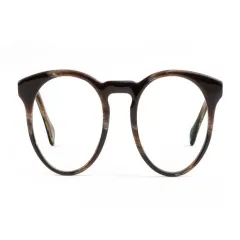
2. GUNNAR Intercept — Best Blue Light Protection
If maximum blue light filtering is your priority and you do not mind an amber tint, the GUNNAR Intercept is the gold standard. GUNNAR has been making computer glasses since 2007 and their lens technology is the most extensively tested in the industry.
The 65% blue light filtering is the highest on this list, and GUNNAR publishes third-party lab results to prove it. The trade-off is a visible amber tint that shifts colors noticeably. You will not want to use these for photo editing or color grading, but for writing, coding, spreadsheets, and video calls, the tint becomes invisible to your brain within about 15 minutes.
The polycarbonate frames are lightweight and durable — ours survived being accidentally stepped on in a hostel dorm without breaking. The wraparound design blocks peripheral light, creating a slightly warmer visual environment that many users find soothing during late-night work sessions.
GUNNAR’s +0.2 diopter focusing power is a polarizing feature. It provides a slight magnification that reduces the focusing effort your eyes make at screen distance (typically 20-26 inches). Some users love it and feel immediate relief. Others find it slightly disorienting. If you have perfect vision, the magnification is subtle enough to adapt to within a day.
At $55, GUNNAR sits in the mid-range and delivers the most aggressive blue light protection you can get without prescription amber-tinted lenses.
Pros
- Highest blue light filtering at 65%
- Third-party lab-tested results published
- Built-in +0.2 diopter reduces eye focusing effort
- Wraparound design blocks peripheral glare
- Durable polycarbonate survives travel abuse
- Prescription versions available
Cons
- Noticeable amber tint -- not suitable for color work
- Wraparound style looks gaming-oriented
- Heavier at 29g compared to lighter options
- +0.2 diopter takes adjustment if unused to magnification
Best for: Remote workers who prioritize maximum eye protection over color accuracy. Excellent for evening work sessions and anyone who struggles with sleep after late screen time.
Check GUNNAR Intercept on Amazon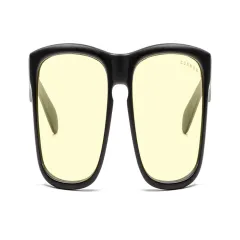
3. TIJN TR90 — Best Budget
The TIJN TR90 consistently ranks among Amazon’s best-selling blue light glasses, with over 20,000 reviews and a 4.4-star average. After testing a $16 pair alongside $95 Felix Grays for two weeks, we can confirm: for most people, these are good enough.
The lenses filter approximately 30% of blue light with minimal visible tint. They are not perfectly clear — a slight yellow cast is visible if you hold them against white paper — but during actual use on a screen, the tint is barely perceptible. Our design tester noted a minor color shift but said it would not affect most design work.
The TR90 frames are the highlight. TR90 is a flexible thermoplastic that bends without snapping, weighs almost nothing (18 grams — the lightest on this list), and is surprisingly comfortable for all-day wear. The flexibility means they fit a wide range of head sizes without the squeezing you get from rigid cheap frames.
Lens quality is the main compromise at this price. The anti-reflective coating is functional but not as effective as Felix Gray or GUNNAR. Under harsh overhead lighting, you will notice more reflections and glare. The lenses also have very slight optical distortion at the edges that becomes invisible once you are focused on a screen at normal distance.
At $16, you can buy six pairs for the price of one Felix Gray. Throw a pair in each bag, keep one at your desk, and do not stress if you lose or break one.
Pros
- Exceptional value at $16 with effective 30% filtering
- TR90 frames are ultralight (18g) and flexible
- Comfortable for all-day wear across head sizes
- Minimal color distortion -- usable for most work
- Multiple style options available
- 20,000+ reviews with 4.4-star Amazon average
Cons
- Anti-reflective coating is basic
- Slight optical distortion at lens edges
- No prescription option (frames only)
- Filtering percentage not independently verified
Best for: Budget-conscious nomads, first-time blue light glasses buyers, and anyone who loses or breaks glasses regularly. Keep a backup pair in your tech bag.
Check TIJN TR90 on Amazon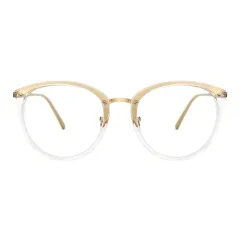
4. Zenni Blokz — Best for Prescription Wearers
If you already wear prescription glasses, Zenni Blokz is the obvious choice. Zenni adds their blue light filtering coating to any frame in their catalog, starting at just $17 for single-vision lenses. That means you get prescription glasses with blue light protection for less than most non-prescription blue light glasses on this list.
The Blokz coating filters approximately 20-30% of blue light with virtually no visible tint. Zenni does not publish exact filtering percentages, which is a transparency issue, but the lenses appear clear and do not noticeably shift colors. Our prescription-wearing tester used them for three weeks of daily remote work without complaints.
The real advantage is frame variety. Zenni offers hundreds of frame styles, from classic wayfarer shapes to modern round frames to professional-looking rimless designs. You can match your personal style rather than being locked into the limited frame options that brands like Felix Gray and GUNNAR offer.
The trade-off is that Zenni is online-only with no ability to try frames in person. Their virtual try-on tool works reasonably well with a webcam but cannot replicate the fit test of wearing frames physically. Returns are accepted but cost $9.95 for U.S. orders. For international nomads, returns become impractical.
Progressive lens wearers should note that Zenni offers Blokz on progressive lenses as well, though the add-on cost brings the total to $40-80 depending on the frame.
Pros
- Prescription blue light glasses starting at $17
- Hundreds of frame styles to choose from
- Virtually no visible tint or color shift
- Available with progressive, bifocal, and single-vision lenses
- Free basic anti-reflective coating included
- Lightweight frames in multiple materials
Cons
- Online-only -- cannot try frames before buying
- Exact blue light filtering percentage not published
- Return shipping costs $9.95
- Lens quality varies by price tier
Best for: Prescription wearers who want an affordable way to add blue light filtering to their daily glasses. The variety and price make Zenni the most practical option for nomads who already need corrective lenses.
Check Zenni Blokz on Amazon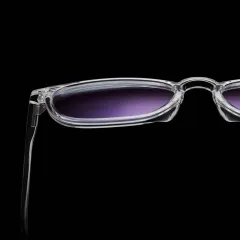
5. Cyxus CR-39 — Best Mid-Range
The Cyxus CR-39 sits neatly between the budget TIJN and premium Felix Gray, offering better lens quality than the former without the price tag of the latter. At $22, it is a compelling option for remote workers who want a step up from budget glasses without overspending.
Cyxus uses CR-39 resin lenses, which is the same material used in most prescription eyeglasses. Compared to the polycarbonate lenses in budget options, CR-39 provides better optical clarity, less distortion, and a more natural viewing experience. You can feel the difference during extended wear — text appears slightly sharper and the overall visual quality is cleaner.
The blue light filtering sits around 35%, which is the sweet spot for daytime use. The lenses have a subtle blue anti-reflective sheen on the outer surface (visible from the front) but no perceptible color shift when looking through them at a screen.
Frame construction combines TR90 temples with metal hinges, which is more durable than all-plastic budget frames. The nose pads are adjustable silicone rather than fixed plastic, allowing you to fine-tune the fit. At 20 grams, they are lighter than GUNNAR but slightly heavier than TIJN.
We tested these in humid environments across Southeast Asia and the lenses did not fog or degrade. The anti-reflective coating held up well after three months of daily use with no visible scratching despite casual backpack storage.
Pros
- CR-39 resin lenses -- sharper than polycarbonate
- Good 35% blue light filtering without heavy tint
- Adjustable silicone nose pads for custom fit
- TR90 + metal construction is durable and flexible
- Anti-reflective coating effective against overhead lighting
- Strong value at $22
Cons
- No prescription option
- Limited frame style selection
- Slight blue sheen visible from the front
- Less brand recognition than GUNNAR or Felix Gray
Best for: Remote workers who want better-than-budget lens quality without premium pricing. The CR-39 lenses make this the best mid-range option for optical clarity.
Check Cyxus CR-39 on Amazon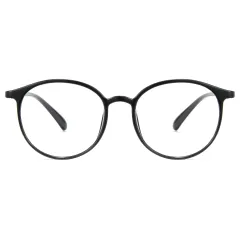
How to Choose Blue Light Glasses for Remote Work
Filtering Level
For daytime screen work, 20-40% filtering is ideal. This range reduces enough blue light to ease strain without distorting colors. For evening use when you want to protect your circadian rhythm and improve sleep, look for 50-65% filtering (accept the amber tint as a feature, not a bug).
Lens Quality
This is where cheap glasses create problems. Low-quality lenses introduce optical distortion that forces your eyes to work harder, potentially causing more strain than they prevent. Look for lenses labeled as “optical-grade,” CR-39, or polycarbonate from reputable manufacturers. If text looks wavy or edges blur when you put the glasses on, return them.
Frame Comfort
Remote workers wear these glasses longer than casual users. Prioritize lightweight frames (under 25g), spring or flex hinges that accommodate different head widths, and nose pads that distribute weight evenly. Fixed-bridge frames work for some face shapes but cause discomfort for others during extended wear.
Anti-Reflective Coating
This matters more than many people realize. Harsh overhead lighting in coworking spaces and cafes causes glare on your lenses that contributes to eye strain. A good anti-reflective coating eliminates these reflections and improves visual comfort significantly, especially under fluorescent lighting.
Complementary Strategies for Eye Comfort
Blue light glasses are one piece of the puzzle. For comprehensive eye care during long remote work sessions, combine them with:
- The 20-20-20 rule: Every 20 minutes, look at something 20 feet away for 20 seconds.
- Software filters: Enable f.lux, Night Shift, or Windows Night Light for additional blue light reduction directly on your screen.
- Monitor positioning: The top of your screen should be at or slightly below eye level, positioned 20-26 inches from your eyes.
- A quality portable monitor: A second screen reduces squinting at small text. Check our best portable monitors for digital nomads guide.
- Proper lighting: Avoid working in complete darkness with a bright screen. Match ambient lighting to screen brightness.
For your complete remote work setup, see our remote work productivity setup guide and ergonomic travel gear recommendations.
The Bottom Line
If you spend 8+ hours daily on screens as a remote worker or digital nomad, blue light glasses are a low-cost investment in daily comfort. They will not cure eye strain on their own, but combined with good screen habits, they make a noticeable difference in how your eyes feel at the end of a long workday.
Our recommendation: The Felix Gray Turing ($95) is the best overall option for daily all-day wear with no color compromise. The TIJN TR90 ($16) is the best value if you want to try blue light glasses without committing to a premium pair. If you need prescription lenses, go directly to Zenni Blokz — it makes no sense to stack blue light glasses over prescription glasses when you can combine them for $17.
For more gear recommendations, check out our complete digital nomad packing list and best internet setup for digital nomads.
Frequently Asked Questions
Do blue light glasses actually work?
Blue light glasses filter a portion of high-energy visible (HEV) blue light emitted by screens. Research is mixed on whether they prevent long-term eye damage, but many users report reduced eye strain, fewer headaches, and better sleep when wearing them during extended screen sessions. The American Academy of Ophthalmology notes that digital eye strain is more about screen habits than blue light itself, but filtering glasses can still help as part of a broader eye-care routine. Our testers consistently reported subjective improvements in comfort during 8+ hour workdays.
What percentage of blue light should glasses block?
For daytime computer use, glasses that block 20-40% of blue light are ideal. This filters enough HEV light to reduce strain without distorting colors, which matters for designers and anyone doing color-sensitive work. For evening use to improve sleep, glasses that block 80-99% of blue light in the 450-495nm range are more effective. Avoid glasses marketed as blocking 100% of blue light for daytime work because they create a heavy amber tint that makes everything look yellow.
Can I get blue light glasses with prescription lenses?
Yes. Most blue light glasses frames can be fitted with prescription lenses at any optician. GUNNAR and Felix Gray offer prescription options directly through their websites. If you already wear glasses, you can also add a blue light coating to your existing prescription lenses for about $20-50 at most optical shops. Clip-on blue light filters are another option that fits over any prescription glasses.
Are expensive blue light glasses worth it over cheap ones?
For basic blue light filtering, cheap glasses in the $15-25 range work fine. The difference with premium glasses ($50-100+) is typically lens clarity, anti-reflective coatings, frame durability, and comfort during extended wear. If you wear glasses 8+ hours daily, the comfort and optical quality of higher-end options like Felix Gray or GUNNAR justify the premium. If you only need them occasionally, a budget pair from Amazon is perfectly adequate.
Should I use blue light glasses or a software filter like f.lux?
Ideally, use both. Software filters like f.lux, Night Shift, and Windows Night Light reduce blue light from your screen but do not block ambient blue light from overhead lighting, other screens, or reflections. Blue light glasses filter all blue light reaching your eyes regardless of source. Software filters are free and should be your first step. Add glasses if you still experience eye strain, work in bright co-working spaces with harsh fluorescent lighting, or use multiple screens.
Do blue light glasses help with headaches from screen time?
Many users report fewer headaches when wearing blue light glasses during extended screen sessions. The mechanism is likely a combination of reduced glare (from anti-reflective coatings), reduced eye strain (from blue light filtering), and the placebo effect of consciously protecting your eyes. If you get frequent screen-related headaches, blue light glasses are worth trying alongside other interventions like the 20-20-20 rule, proper monitor positioning, and adequate hydration.